
Self-help, care for the environment, grace and courtesy.
Pouring, buttoning, sweeping, table-setting. Small acts of independence, repeated until they’re a habit. Confidence built one morning at a time.
Two methods. By design. Montessori builds the foundational learning habits each morning. The Music, Art & Performance (MAP) Programme rotates five disciplines through the week, taught by specialists. From two months to the Primary Years, the same teaching team stays with your child all year.
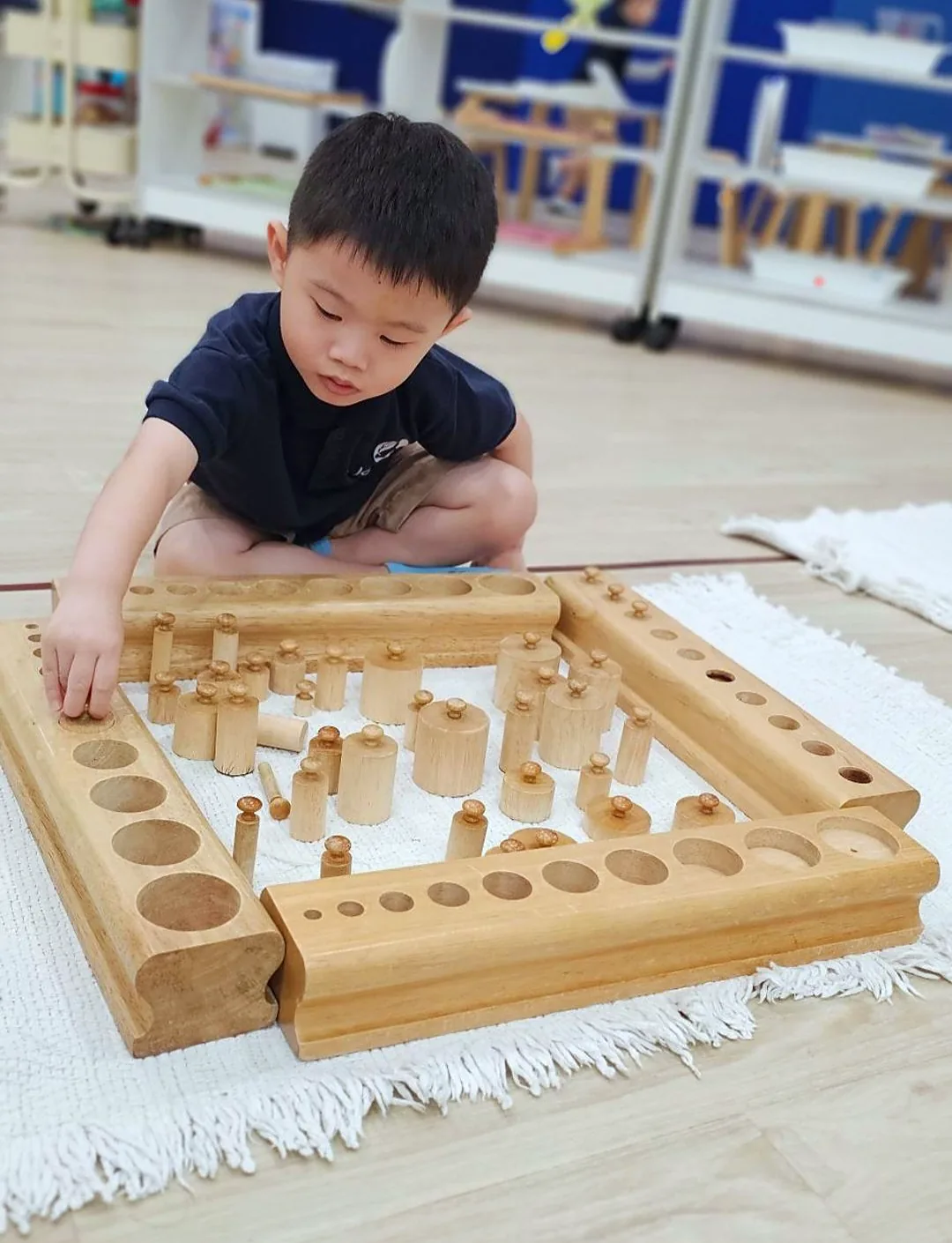
Two complete methods, run side by side from infancy. Montessori builds the work cycle and the self-directed mind. MAP gives the same child a voice on stage.
Your child focuses on the work that matters to them, for as long as it takes. We build the morning around that focus: authentic apparatus, a plan your child owns, the same trained teacher all year. Teachers watch, then step in when your child needs them.
The MAP Programme is a full programme, not enrichment. Specialist-led sessions inside the school day, five disciplines rotating through the week. Showcases from N1, a K2 graduation performance on stage.
The work cycle has a defined shape: choice, sustained work, completion. Children choose from well-prepared materials on shelves. The work happens. Children choose the form and the pace. Teachers present, then observe.
Pouring, buttoning, sweeping, table-setting. Small acts of independence, repeated until they’re a habit. Confidence built one morning at a time.
Children use all five senses to build spatial and visual discrimination. This work lays the foundation for mathematics. Pink Tower, Brown Stair, Sandpaper Letters and Numbers on the shelves at the right moment.
Phonics-led English with Josiah Phonics. Mandarin literacy through 华文青草原. Reading and writing move from sound to symbol to first sentences.
Number rods, golden beads, stamp game. By K2, addition, subtraction, multiplication and division are concrete and unhurried.
The world made visible. Continents on a low map, leaves named on a tray, the year laid out as a long ribbon. Wonder, given structure.
Climbing, running, planting, watering. The body learns alongside the mind. Outdoor every day the weather allows it.
Vocal Training, Dance, Art Appreciation, Classical Music Appreciation, and Chinese Speech & Drama. Each cohort has frequent performing opportunities, building up to the K2 graduation performance on stage.
One discipline per day, rotating through the week. Specialist teachers lead each session, working alongside the same Josiah team your child sees every morning. The block runs inside the school day, included in tuition.
We rehearse performance. Every child knows the stage before an audience arrives. By N2, your child has stood in front of an audience. By K1, on a stage. The K2 graduation performance is the last in a long line of small ones.
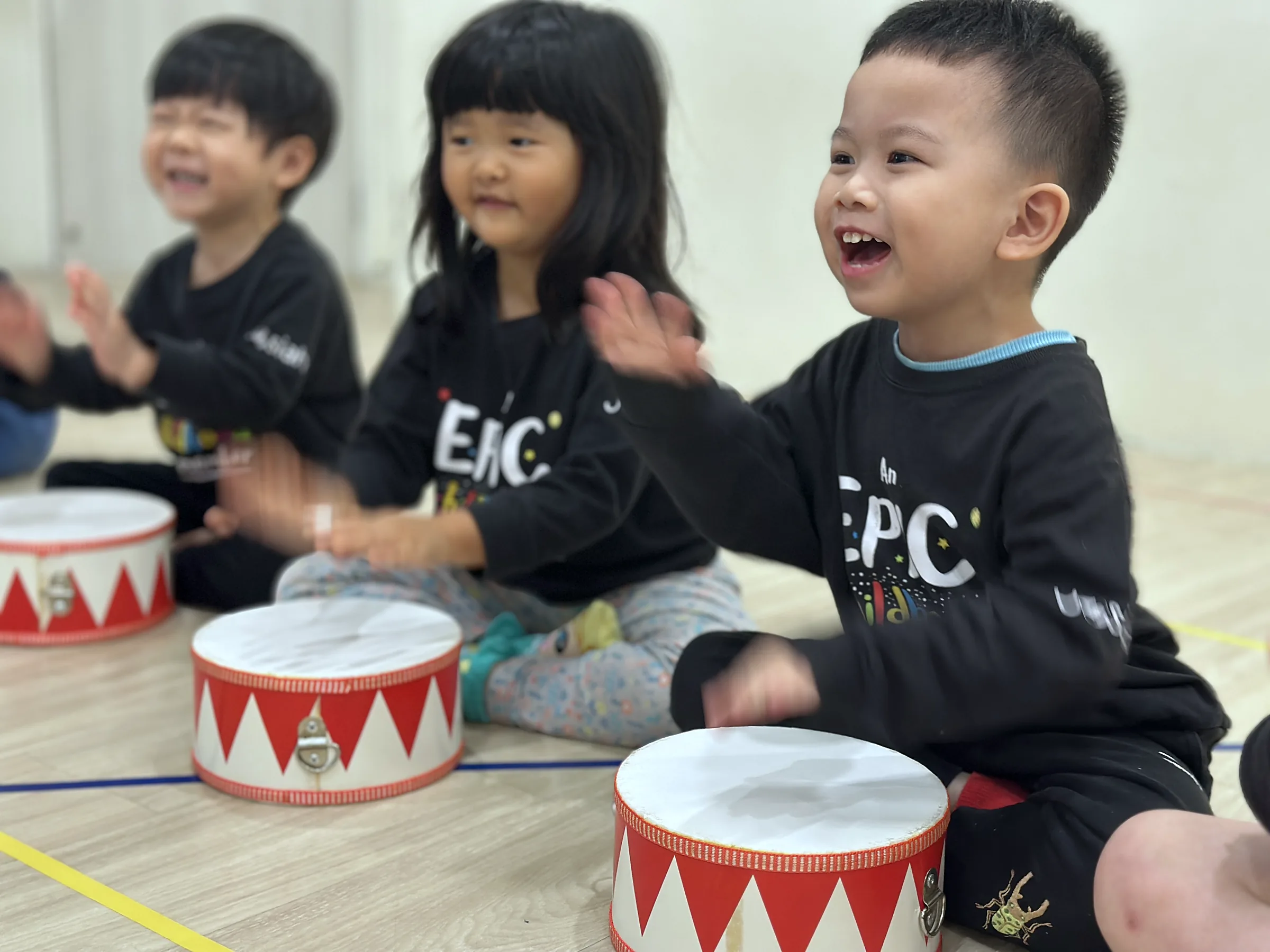
The MAP Programme is built on five practices, present in the weekly rhythm. We teach them together, not as one-offs.
Children listen closely, recognise music, and sing. Sound comes first, the page comes later.
Children work toward small, named goals. Practice becomes a habit before it becomes a test.
Children learn stage discipline. Where to stand, how to wait, when to come in, how to end.
The body learns the count before the page does. Movement and dance build coordination, rhythm, spatial awareness, and teamwork.
Children build creative expression and stage presence in two languages. English and Mandarin, on the same stage, in the same school year.
MAP practices draw on six established pedagogies. Kodaly for ear training. Trinity College London for performance standards. Dalcroze for movement and rhythm. Modern Vocal Training for voice. Carolyn Lucento for Orff-Schulwerk music appreciation in Montessori settings. NTU Confucius Institute for Chinese speech and drama.
The habits parents name back to us at K2 graduation.
The child who would not enter the room in February is the one running the morning circle in October.
Self-direction is a small habit, repeated every morning, until it stops being remarkable.
Mixed-age groupings make it normal to help and to be helped. Children both give help and ask for it.
Project work runs across weeks. Stage time is shared. The child learns to wait, to come in, and to carry their part.
Montessori fills the morning work cycle; the MAP block rotates through the week. Both run with the same teaching team, in the same room. The two methods don’t sit on separate tracks; they shape one continuous day. See how they meet on a 45-minute visit →
Most schools pick a side. Josiah runs both, at depth, on every child.
| Capability | Josiah | Questions to ask other schools |
|---|---|---|
| Montessori as the actual method | Authentic apparatus. Individualised plans. Self-paced work cycles, observed and followed. | Ask whether Montessori is run as a full method or used as inspiration. Look for authentic apparatus, observation-led teaching, individualised plans, and Montessori-trained teachers. |
| Performing Arts as a second pedagogy | Five domains: Vocal, Dance, Art, Classical Music Appreciation, and Chinese Speech & Drama. Built in-house. Run on every child. | Ask whether the arts are a core programme or optional enrichment. Look for teacher ownership, regular performance practice, and inclusion in tuition. |
| Bilingual literacy from infancy | English and Mandarin via Josiah Phonics and 华文青草原. A bilingual environment, not a language class. | Often half-day Mandarin or weekly enrichment. Stronger in primary, lighter in early years. |
| One school, from two months to Pre-primary | The same teaching team holds the thread across the year. Music and Montessori run together, infant care to Pre-primary, under one Josiah Way. | Frequent transitions across infant care, preschool, and pre-primary providers. |
These are questions to ask any preschool you visit. Specifics vary by school, so bring them to the tour.
Walk through the space, see the twofold environment, ask any questions. Bring your child if you like. We watch for willingness to explore.