
Josiah Online.
The home extension for Josiah parents: self-regulation guides, phonics practice, vocal and dance prompts. Built so the work cycle can continue at the kitchen table.
Founded in 1997. Built around an independent learning work cycle and a Music, Art & Performance (MAP) Programme of our own. Five centres, central and east. From two months to Kindergarten.
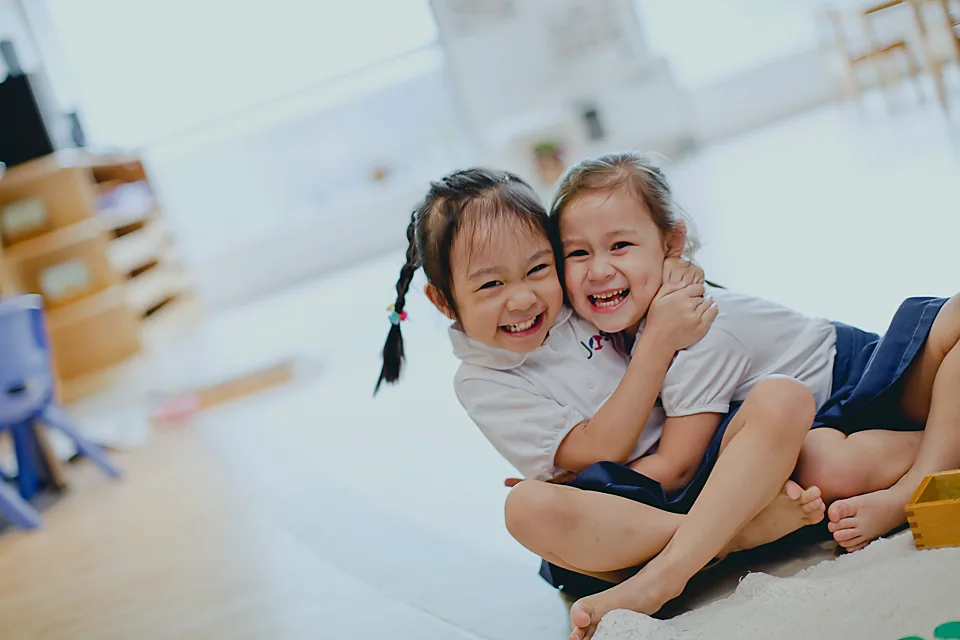
Josiah Montessori opened in 1997 with a single conviction: Montessori, run as the actual method, could be taught at depth in Singapore. And that it would carry a child further if a second architecture ran alongside it.
The MAP Programme was built in-house in the years that followed. Five disciplines, taught by specialists, rotating weekly: Vocal Training, Dance, Art Appreciation, Classical Music Appreciation, and Chinese Speech & Drama. A second developmental architecture for the same child.
Twenty-nine years on, thousands of Josiah graduates have walked into the primary years. Some are now parents themselves, returning with their own children. The architecture has not changed.
Running two full methods in parallel costs us in teacher time and training. We chose it anyway. It was the only way the foundation work would be complete.
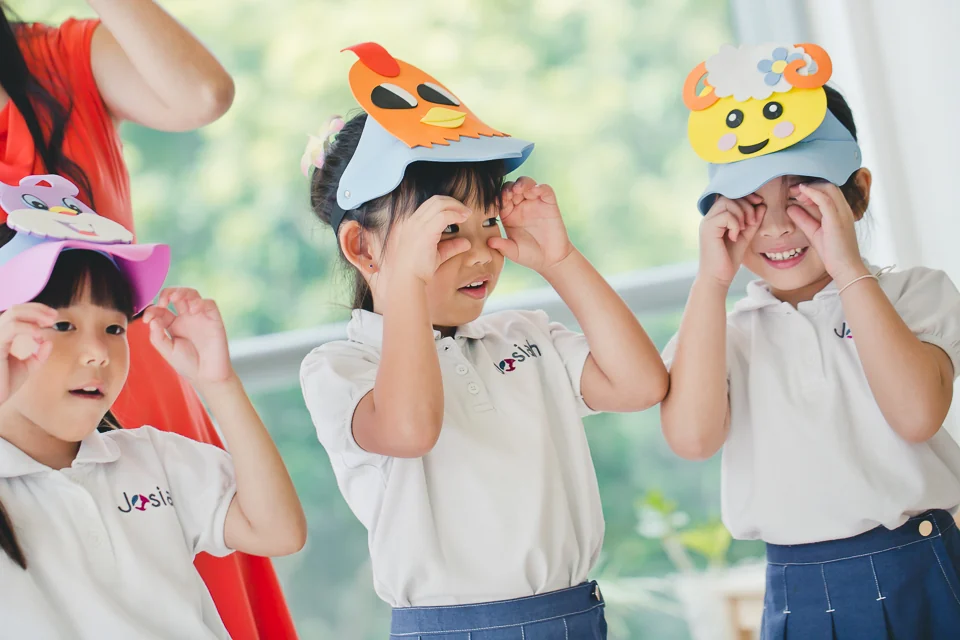
Thousands of graduates. Some now parents themselves, returning with their own children. The architecture stays: Montessori in the morning, MAP through the week, the same teaching team across the year.
Josiah is a historic name for a child shaped by careful upbringing. Our emblem, a mother embracing a child, reminds us why we exist: to partner with the parent, not replace them.
Directors. Co-founders. Still in the school, still observing classrooms, still in the room when a child reads their first sentence or finishes their first piece on stage.
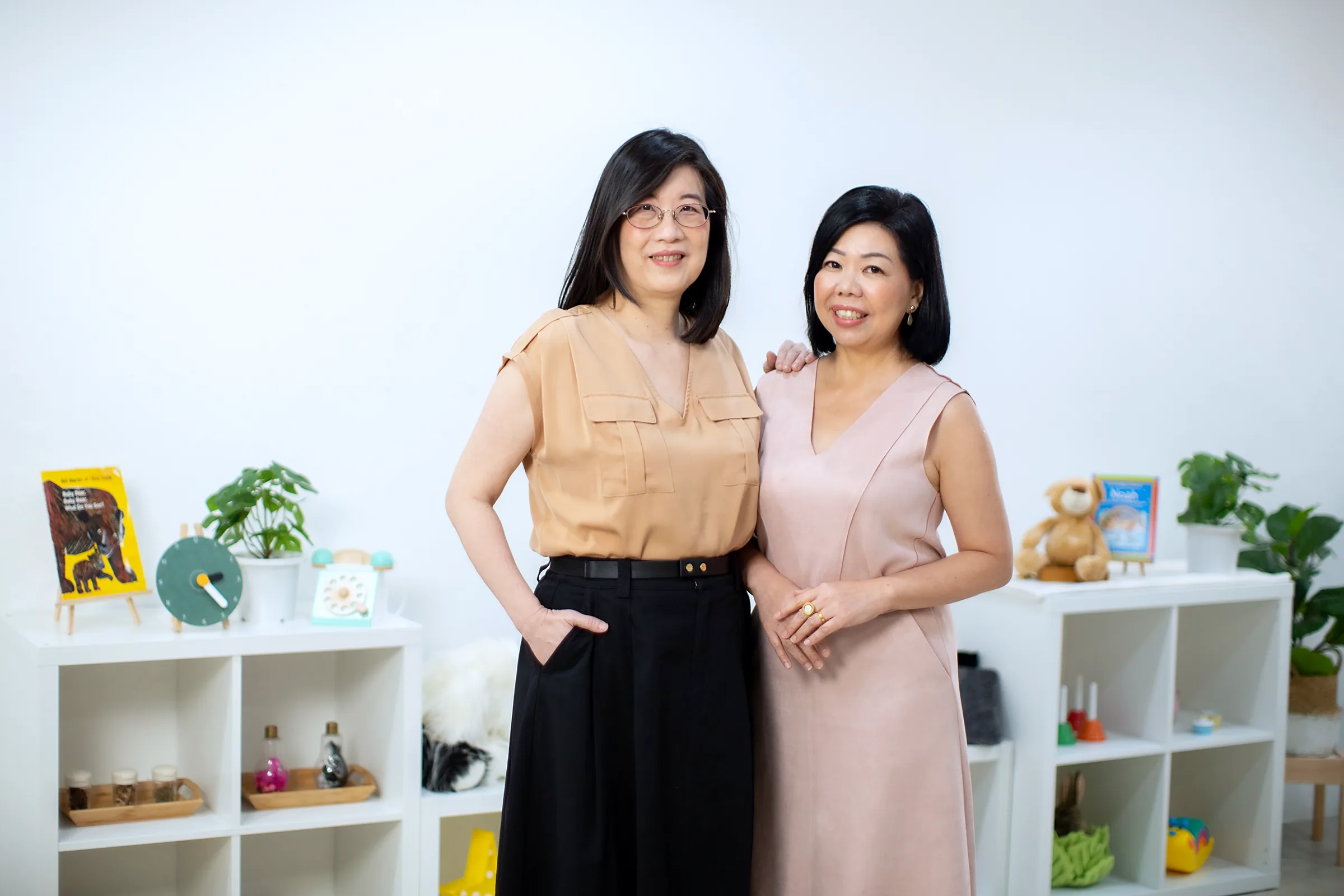
Wendy Tan and Lena Lim opened Josiah in 1997, convinced that Montessori, taught fully and without shortcuts, was the right method for Singaporean children. In 2017, drawing on their own backgrounds in music, they designed the MAP Programme to sit alongside Montessori. One school. Two methods. Both built by both of them. They are still here.
Our pride is to give your little ones the confidence to celebrate every single day
— Wendy & Lena
We’ve kept this pattern since 1997.
We know your child by name, by temperament, by what they were working on yesterday.
Daily notes, observation summaries, and the apparatus in the child’s hands. The plan is shared, not hidden.
We keep cleaning rhythms, drop-off routines, and signed handovers visible, not assumed.
Some children need a different kind of attention. Josiah Care provides early support inside the classroom community.
Main teachers hold a DECCE or recognised equivalent. 100 hours of in-house Josiah Way training before meeting your child. Main teachers, supported by allied teachers, in every classroom.
Main teachers hold a DECCE or recognised equivalent.
100 hours of in-house Josiah Way training before meeting your child.
Main teachers, supported by allied teachers, in every classroom.
Three places the Josiah method goes outside the classroom: home practice, early intervention, and holiday programmes.
The home extension for Josiah parents: self-regulation guides, phonics practice, vocal and dance prompts. Built so the work cycle can continue at the kitchen table.
Early intervention for children with learning or developmental needs. Built on the same Montessori principle of individualised attention and patient observation.
Holiday camps, MAP intensives, and weekend programmes open to Josiah children and other Singapore families. Run by the same specialists as the school week.
Most preschools rotate teachers, syllabi, and centres. Josiah’s leadership team teach in the rooms they design, observe in the classrooms they built, and train new teachers in the Josiah Way. The same pair of hands that wrote the early-years curriculum still corrects it.
The curriculum the founders wrote is the curriculum they still teach. Across stages, across centres, across every year we have been open.
Walk through the space, see the twofold environment, ask any questions. Bring your child if you like. We watch for willingness to explore.