
First music exposure
Lullabies, rhythm play, voice and percussion at infant range. The MAP specialist visits the room with age-appropriate instruments.
Two methods, the same teaching team, every stage. Montessori builds the foundational learning habits. The Music, Art & Performance (MAP) Programme builds expression. Stage by stage, what your child learns and leaves with.
Stages on this page: Infant (2–18 months) · Toddler (18 months–2.5 years) · Nursery N1 & N2 (2.5–5 years) · Kindergarten K1 & K2 (5–6 years).
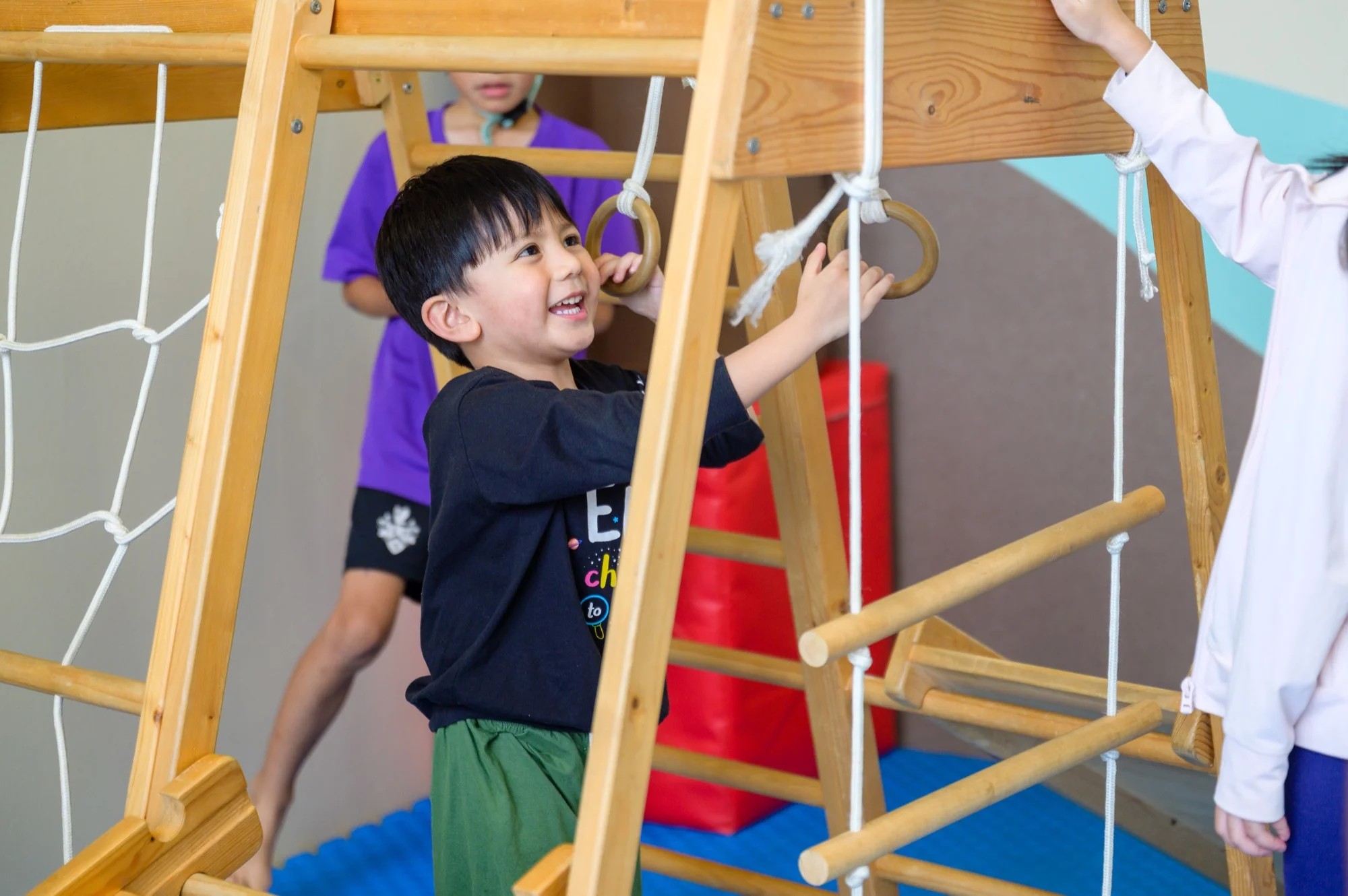
The same three columns, every age band. Read down the column to see how each method deepens. Read across the row to see how the two methods meet in your child’s day.
| Stage · age · ratio | Montessori | Music • Art • Performance (MAP) | Mandarin |
|---|---|---|---|
| Infant | Sensorial exposure. Held, sung to, observed. First practical-life preparation at the low table. | Music-infused environment. Baby Jukebox, lullaby and rhythm play built into the day. | Bilingual environment. Mandarin spoken, sung and read into the room from the first morning. |
| Toddler | Self-help skills. First Practical Life, Sensorial and Language shelves. The first independent choices. | Movement · Voice · Language. MAP specialist enters the classroom for 1.5-hour sessions. | Tonal exposure, sandpaper characters, songs from 华文青草原. |
| Nursery N1 & N2 | Independent learning work cycle. Mixed-age peer modelling. Real apparatus, daily. | Five disciplines, rotating weekly: Vocal Training, Dance, Art Appreciation, Classical Music Appreciation, Chinese Speech & Drama. | Speaking · Reading · Writing. Bilingual literacy daily through Josiah Phonics and 华文青草原. |
| Kindergarten K1 & K2 | Advanced independent learning work cycle. Project work that runs across weeks, not days. | Five disciplines, rotating weekly. Frequent showcases, building to the K2 graduation performance on stage. | Speaking · Reading · Writing. Bilingual literacy at depth in both English and Mandarin. |
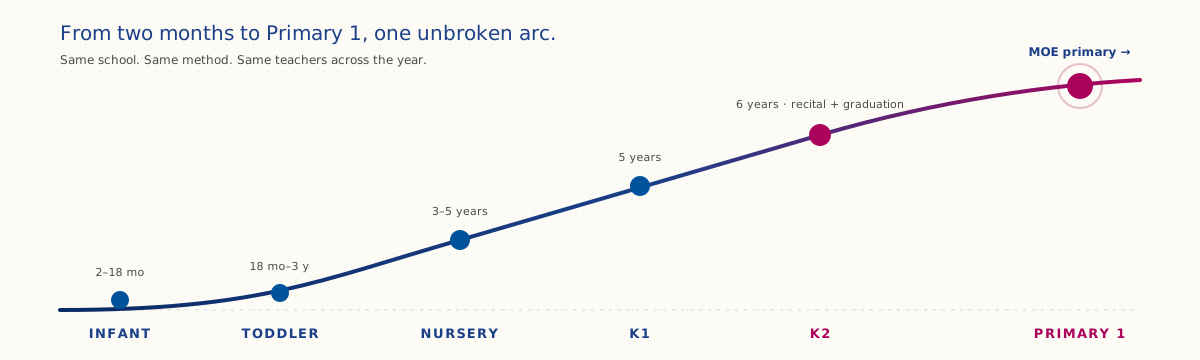
Montessori starts at two months and runs all the way through to pre-primary. The MAP Programme joins from toddler and runs to the same end. Both lines reach pre-primary at full scope.
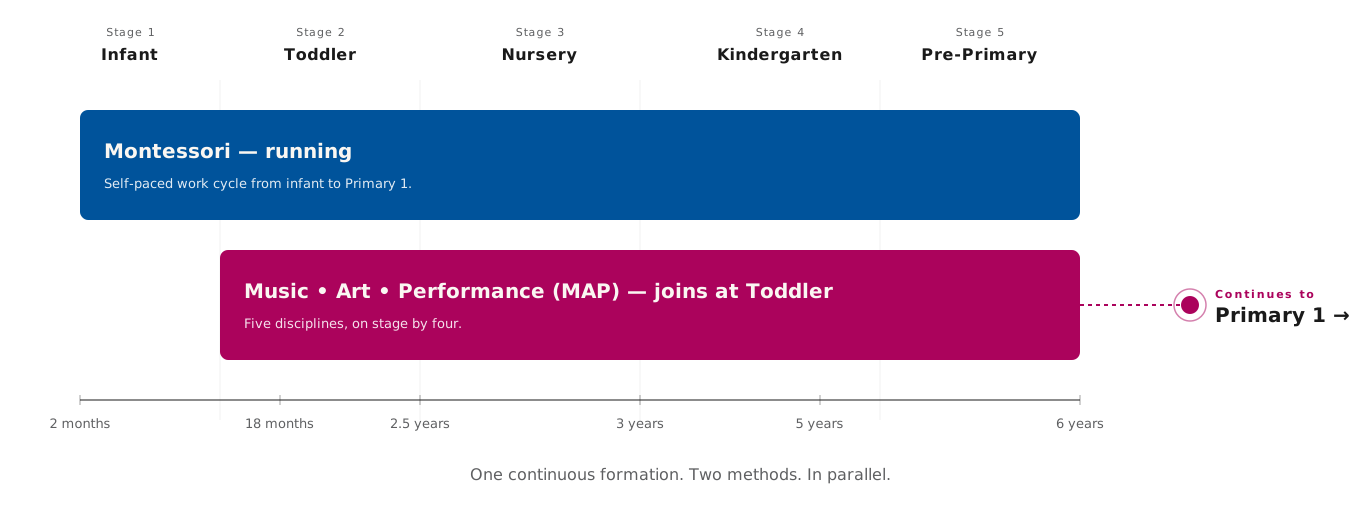
Read left to right: Infant, Toddler, Nursery N1 & N2, Kindergarten K1 & K2, Pre-primary readiness.
Three pillars carry the infant year: Montessori, Music, Bonding. The room is soft, the light is low, the group is small, and the same primary teacher holds your child across the whole year.
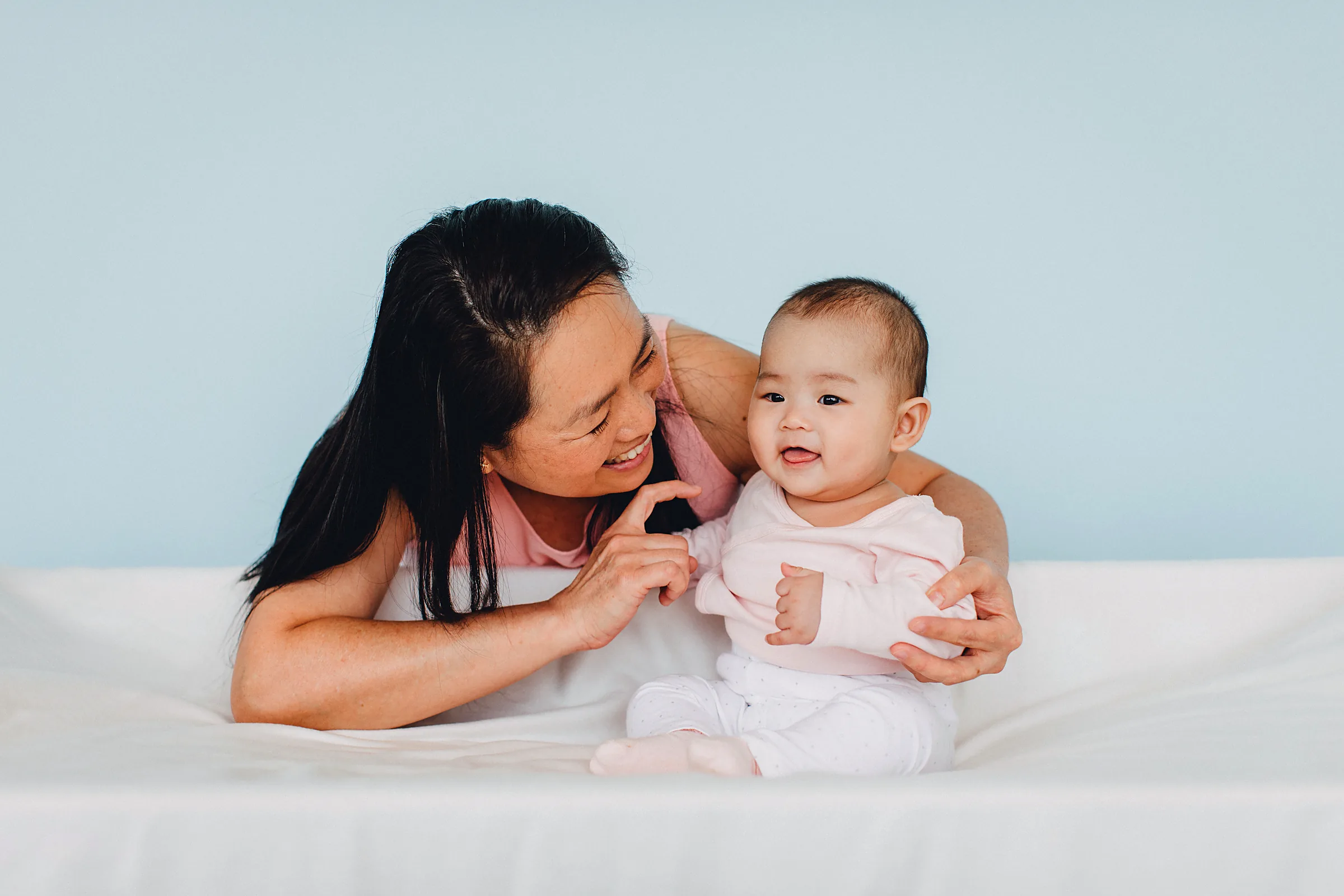
What you will see. Low light. Soft surfaces. A small group. The same primary teacher held for the whole year. Self-feeding from the earliest stage. Movement on a real floor, not in a bouncer.
What we measure. Sleep routine, feeding pattern, response to voice, recognition of familiar faces. One observation note home each day.
Five named blocks, repeated daily, shaped to your child’s rhythm.
Lullabies, rhythm play, voice and percussion at infant range. The MAP specialist visits the room with age-appropriate instruments.
Tummy time, supported sitting, supported standing, the first crawls. Soft mats, low mirrors, the room set up for gross-motor milestones.
Textured materials, named colours, sound shakers, scent boxes. Montessori sensorial work begins at infant scale.
Short stories read at lap-distance, English and Mandarin. Books at the child’s reach.
Sleep when sleep is needed. Dim light, soft music, the same teacher on hand. Rest is part of the curriculum.
The Purple File travels with your child. Teachers write into it. You read it at pick-up.
If a child needs a different kind of attention, we raise it with you.
The toddler year is the first time your child chooses. Self-feeding, self-dressing, the first Practical Life shelves. The morning rhythm we build at two is the one they walk into at five.
The shelves are set in this order, every classroom, every centre. The order is not decorative. It is how the child learns to find their own work.
The MAP specialist enters the classroom for 1.5-hour sessions. Voice, movement, listening, the first stage habits.
Ratio: 1:5, ECDA-aligned. Hours: 7am–7pm full day.
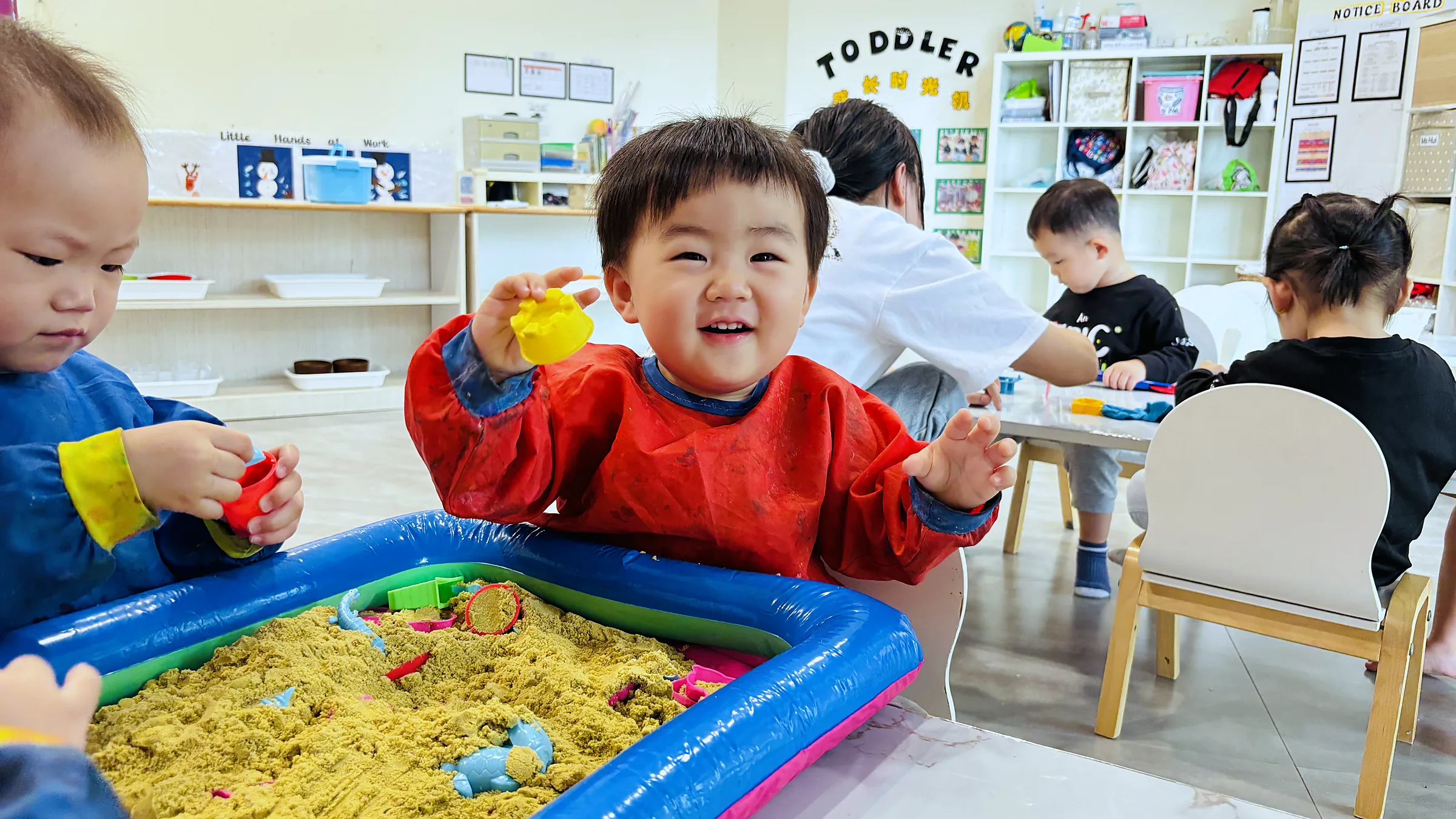
From N1 through to K1, every part of the Josiah curriculum runs at full scope. The independent learning work cycle stretches to three hours. The five MAP disciplines rotate through the week.
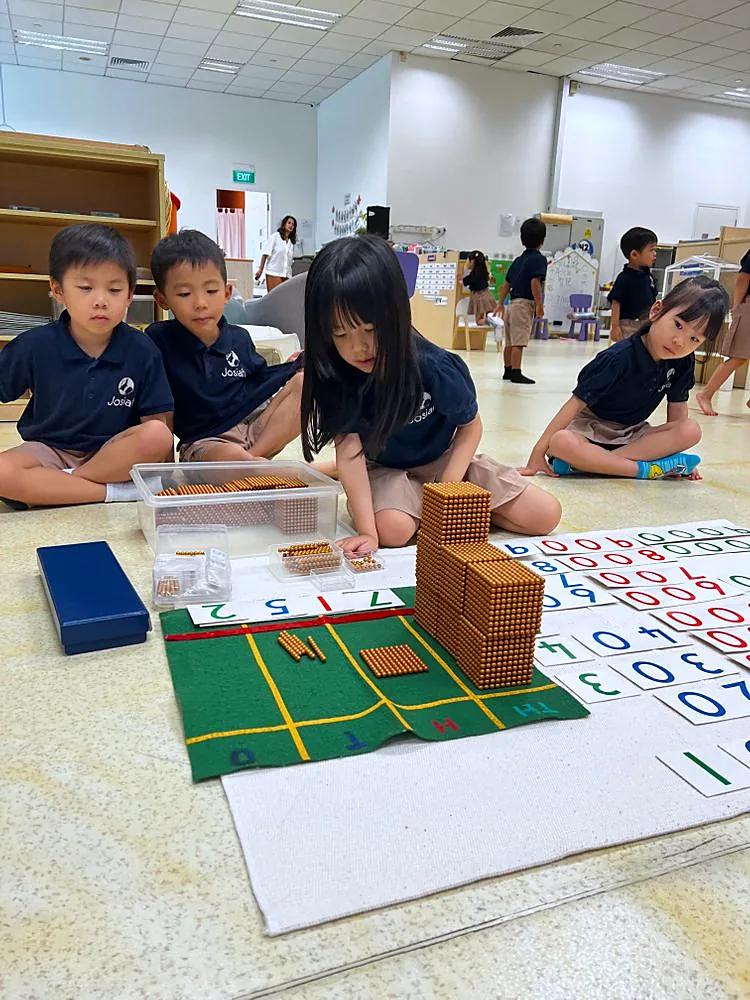
The classroom is set with eight working areas. Children choose, work and complete on their own clock. Teachers watch, then step in.
Five disciplines, built into the daily rhythm and rotating through the week. Specialist-led, inside the school day.
Ear training before the eyes. Children listen closely, recognise music, and sing.
The body learns the count before the page does. Movement and dance build coordination, rhythm, spatial awareness, and teamwork.
Looking, naming, making. Children learn to see, then to respond to what they see.
Composers and pieces named, returned to, recognised. The room hears classical music as part of the day.
Stage presence in Mandarin. Children build creative expression and stage presence in two languages.
Frequent showcases across N1 to N2. Children learn stage discipline before the stage itself.
The final term of K2 builds the explicit Primary 1 skills (reading fluency, written number bonds, structured handwriting practice) without abandoning the Montessori work-cycle structure that made them possible.
Graduates have moved on to local and international schools across Singapore.
Walk through the space, see the twofold environment, ask any questions. Bring your child if you like. We watch for willingness to explore.